
CHIVALRY
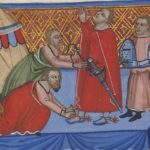
Spurs
- 11th-15th centuries
- Wrought iron
- France and England
A spur is a metal element fitted to the heel on a rider’s boot. It has a spike or wheel at the back, depending on the period. The rider prodded it into the horse’s side to make it go faster. The spur was one of a knight’s attributes.
Spur from the 11th-12th century
The spur characteristic of the 12th century was fitted with a long, sharp tip that was embedded in the horse’s side.
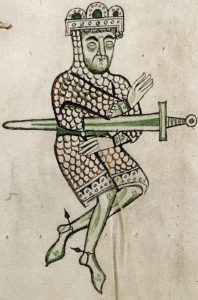
King Saul, Bible of Worms (Germany), about 1148, British Library
Spur from the 12th-13th century
In the late 12th century, the spike at the back of the spur was shortened and given a pyramid shape.
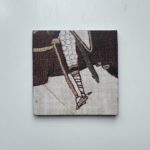
Bayeux Tapestry, 11th century, Bayeux Museum (Normandy)
Spur from the 13th century
A sort of metal ball or sometimes a small disc was added to the spike on the spur, so that the spike was not fully embedded in the animal’s side.
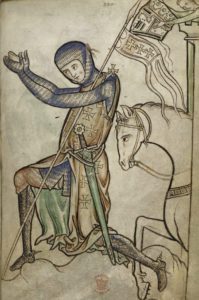
Westminster Psalter, 1250, British Library
Spur from the 14th-15th century
In the 14th century, the design of spurs radically changed, with wheels (rowels) with several spokes added to injure the animal less.
3 extra icons to illustrate 3 types of spur:
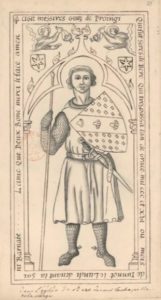
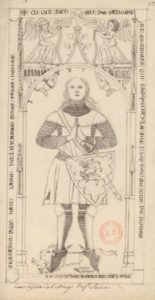
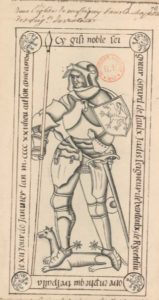
These three drawings of tombstones show changes to the design of spurs down the centuries, as well as the horse-rider’s equipment. First, chain mail and a tabard, then the earliest plate armour to protect the legs and finally full plate armour.
- Prick spur: Légende: f. 25r, France, Beire, church: tomb of Gui de Proigny
- Round end spur: Légende f. 173r, France, Saint-Seine-l’Abbaye, abbey church: tomb of Richard de Jaucourt
- Rowelled spur: Légende: f. 79r, France, Messigny, church: tomb of Gérard de Saulx
Harness pendants
- 14th-15th centuries
- Gilded or enamelled bronze
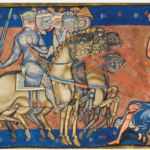
A pendant is a decorative element in a horse harness. Symbolically, the pendant was designed to protect the horse, giving it strength and stamina.
Picture caption : The Trinity Apocalypse, about 1350, Library of Trinity Collège, Cambridge